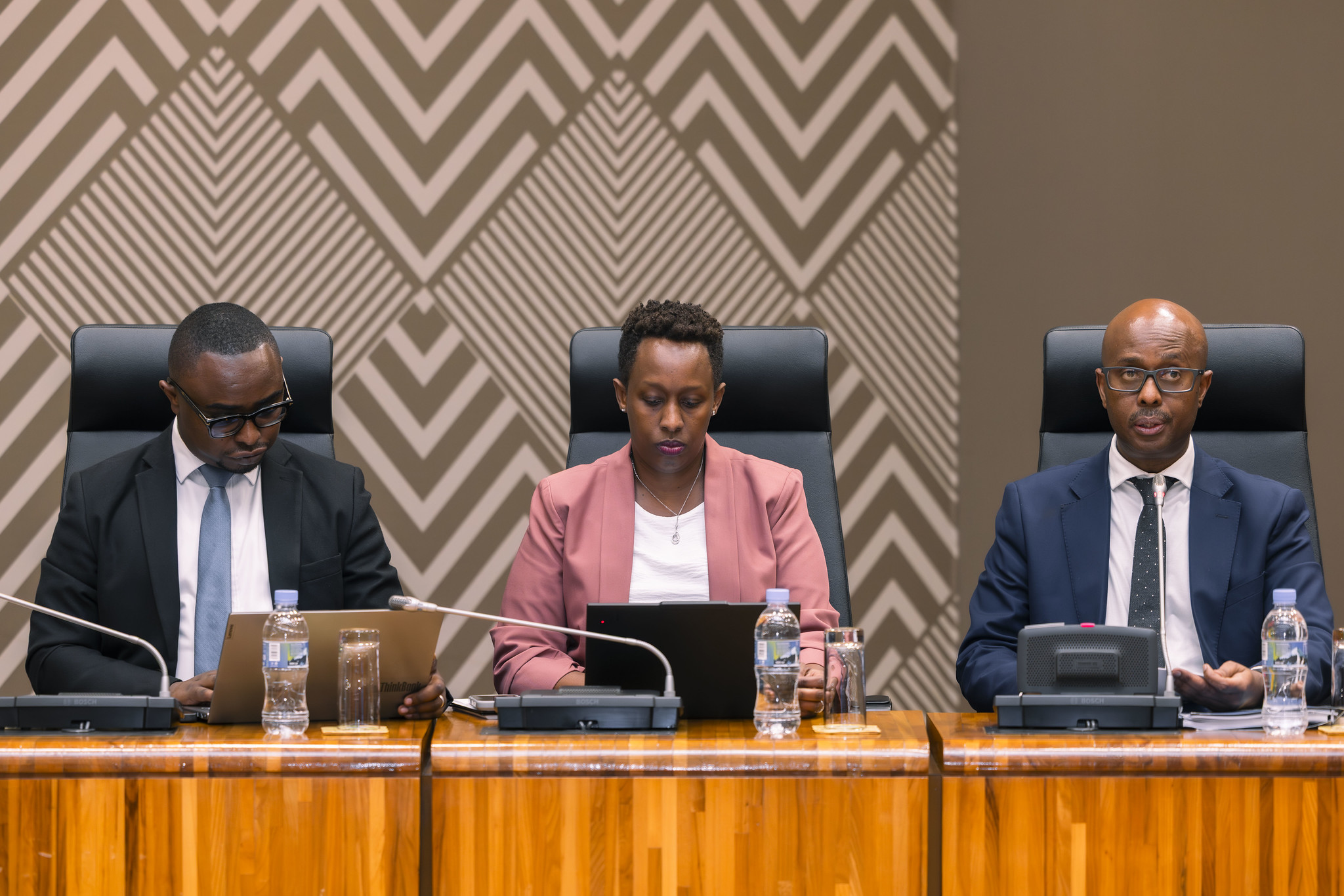

The Parliament of Rwanda is the country’s national legislature, created by the Constitution of the Republic of Rwanda. It has two chambers, The Chamber of Deputies and The Senate of Rwanda. It replaced the National Transitional Assembly after the 1994 Genocide against the Tutsi.
Mission
To make laws and oversee the actions of the executive on behalf of the people of Rwanda
Vision
To make laws and oversee the actions of the executive on behalf of the people of Rwanda
63%

Women Representation
25
Senators
80
Deputies
13
Stating committees
The Senate

Current Legislature
4th Legistrature: 2024 - 2029
Hon. Kalinda François-Xavier
The president of the Senate
Composition (26)
- 12 elected by councils
- 8 appointed by the president
- 4 designated by political organizations
- 2 from universities (public & private)
The Chamber of Deputies

Current Legislature
4th Legistrature: 2024 - 2029
Hon. KAZARWA Gertrude
The speaker of Parliament
Composition (80)
- 53 elected by proportional representation
- 24 women elected by electoral college
- 2 youth representatives
- 1 representative of persons with disabilities
Pre - 2003
Transitional Period
After the 1994 Genocide against the Tutsi, Rwanda was governed by a Transitional Government. During this time, the National Transitional Assembly served as the legislative body, helping stabilize governance and rebuild state institutions.
2003
Birth of the modern Parliament
The adoption of the Constitution of the Republic of Rwanda in 2003 officially created the current bicameral Parliament, made up of The Chamber of Deputies and The Senate. This marked the transition from temporary institutions to a permanent democratic framework.
2003 - 2008
Institutional Strengthening
Parliament focused on building its foundations by establishing procedures, committees, and administrative systems. Laws during this period emphasized national unity, reconciliation, and rebuilding state institutions.
2008 - 2018
Expanding Oversight & Professionalization
The legislature strengthened its oversight role through active committees, increased consultations, and better research support. This improved accountability and evidence-based lawmaking.
2018 - 2024
Governance Reforms & Constitutional Evolution
Parliament adapted to constitutional changes, enhanced transparency, and improved legislative processes. The fourth legislature of the Chamber of Deputies was extended to 2024 following constitutional revisions.
2024 - Present
Consolidated institution
With the current legislatures running from 2024 to 2029, Parliament operates as a stable institution focused on impactful laws, citizen participation, and monitoring national development.